
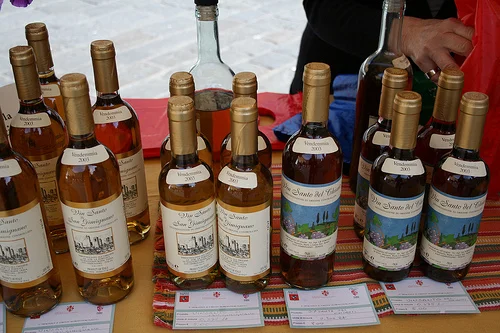
Vin Santo 101

Vin Santo is a traditional dessert wine, with origins in Italy. Vin Santo means wine of the Saints---or holy wine; it is often used for communion, and happens to be bottled right around Easter. It is known as the wine of friendship and hospitality, and myth declares a 14th century friar gave it to the ailing. Although it is acceptable to offer it---and drink it---any time of the day, it is typically served at the end of a meal.
Vin Santo should be served at cellar temperature either alone or with a dessert; it has notes of toffee, dried fruits and nuts. It may remind you of sherry and can be sweet, off-dry or dry. In Italy, desserts are often slightly sweet or even savory (examples: olive oil cake, ricotta cake, a citrus tart or simple plate of butter or nut cookies). Italians often pair a sweet dessert wine with a less sweet treat. The classic pairing for Vin Santo is biscotti.
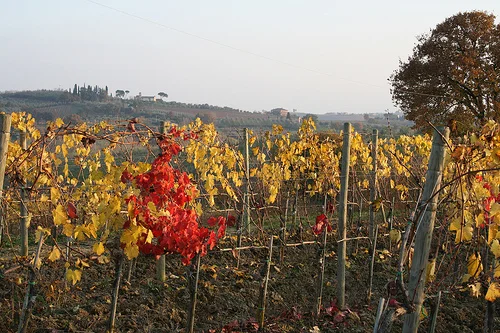
Vin Santo grapes are harvested in September or October; traditionally they were hung in well-ventilated rooms to allow their moisture to evaporate (and to be exposed to temperature fluctuations). Today they are also laid out on straw or plastic mats for drying. Traditionally Vin Santo was aged in small chestnut barrels (caratelli), modern recipes may include oak, cedar or a combination of wood barrels. Madre---thick wine from the prior year---is also added to the barrels, to facilitate the fermentation process. Vin Santo remains in the barrels for two to seven years, and is not typically 'topped up.' As it ages, the wine oxidizes, giving it an amber color and a flavor profile that compares to sherry.
The styles, color, sweetness and quality of Vin Santo can vary widely depending on the grape varieties and production methods used to make the wine. When red grape varieties are used, the wine is often labeled as a Occhio di Pernice or "eye of the partridge," which has its own DOC classification in several regions of Italy. Vin Santos may be fortified, in which case they will be labeled Vin Santo Liquoroso.
Tuscany's Vin Santo DOC uses white Trebbiano Toscano and Malvasia grapes; other regions of Italy also have Vin Santo-labeling status including Marche (85% white Passerina), Veneto (the Graganega grape), Trentino-Alto Adige (only the Nosiola grape) and Umbria. Tuscany's white-grape Vin Santo must have a minimum 16% alcohol level and is composed of at least a 70% blend of Trebbiano and Malvasia---other local white grape varieties constitute the remaining 30%. Tuscany's red-grape Vin Santo must have a minimum alcohol level of 17% and is composed of at least 50% Sangiovese with other local white or red grape varieties making up the remaining 50%. Both wines are to be aged a minimum of 3 years prior to release; wines aged for at least 4 years eligible to be labeled Riserva.

![DaVinci Wine Cookbook: page 2 [of 10]](https://images.squarespace-cdn.com/content/v1/57a8c60be4fcb51e7fd15f9c/1470768076959-TDRRJM9S24PNTKMPC3QO/6044189358_2cddcd6316.jpg)